Saturday, 20 November 2021

Types of Concrete and Their Uses

Concrete is a building material that consists of aggregate and a binding substance. The compressive and tensile strengths are produced by the aggregate in conjunction with the binding material (cement). The compressive strength of concrete protects it from deformation produced by the structure's compression, whereas the tensile strength protects it from distortion caused by breaking or expansion. The aggregate and binding material used in concrete determine the concrete's compressive strength entirely, but the tensile strength is determined in part by the aggregate and binder, and in part by the reinforced material (steel, fibre, and other metallic cables).

Concrete is classified into numerous categories based on its composition, as shown below:

Plain/ Ordinary Concrete:

This is the most frequent and common sort of concrete. It's made with a 1:2:4 mix of cement, sand, aggregate, and water. In these types of concrete, ordinary cements such as OPC and PPC are commonly employed. This concrete works well for laying floors, paving roofs, and other flat surfaces. It has the same compressive strength as other varieties of concrete, but it has a lesser tensile strength than those that include reinforcing materials such as steel, iron, metal, and cable.


Self Compacting Concrete:

A concrete mix with low yield stress, high deformability, good segregation resistance, and moderate viscosity is known as self-consolidating concrete or self-compacting concrete.

Precast Concrete:

Precast Concrete refers to the construction of a concrete structure that has been completely prepared offsite. Off-site, the appropriate structure is produced, cast, and cured in reusable moulds, usually in a controlled manufacturing environment. To build a full structure, precast concrete elements can be linked to other elements. They're commonly utilized for structural elements like wall panels, beams, columns, floors, stairwells, pipes, and tunnels.

Reinforced Concrete:

Any type of concrete that uses reinforcing materials such as steel bars, cable, mesh, and fibres to provide high tensile strength is known as reinforced concrete. Heavy loads and burdens are supported by this type of concrete.

Prestressed Concrete:

Prestressed concrete is a structural material that allows for the placement of specified engineering stresses in members to counterbalance the stresses that will arise when they are loaded. It combines the great compressive strength of concrete with the high tensile strength of steel in a single material. Stresses are borne by steel reinforcement in reinforced concrete, whereas induced stresses throughout the structural element sustain the load in prestressed concrete.

Floor beams, piles, and railway sleepers, as well as constructions like bridges, water tanks, roofs, and runways, are increasingly often made with it.

High Density Concrete:

Crushed rocks are utilized as the coarse aggregate in this type of concrete, which has a high density. This type of concrete has a higher density and weight than other concretes. The concrete's compressive strength comes from the indestructible crushed stone aggregate, while the tensile strength comes from steel bars. This type of concrete is utilized in the construction of structures that are designed to withstand enormous loads and burdens. Their own dead weight is likewise quite substantial. The beams, as well as the bridge decks and abutments, are made of high-density concrete.

Polymer Concrete:

In place of cement, polymeric materials such as Furan Resins, Acrylics and Styrene-Acrylics, Vinyl Acetate-Ethylene (VAE), Urea Formaldehyde Resin, Polyvinyl Acetate (PVA), Epoxy Resins, Methyl Methacrylate MMA, Styrene and Polyester Styrene, Methanol Resin, Styrene-Butadiene Resin (SBR), Polyurethan, are applied as binding material.

Cellular Concrete:

Cellular concrete is a light-weight concrete. The concrete has a lower viscosity. Its flow-ability enables it to reach the form's corners and level itself. It's commonly used to build floor slabs, window panels, and roofing. Lighter rock aggregates such as pumice, scoria, shale, and clay are used in this form of concrete.

Glass Reinforced Concrete:

Glass Reinforced Concrete is made up of high-strength, alkali-resistant glass fibres that are inserted in a concrete matrix. The structure's tensile strength is provided by the fibres, while the compressive strength is provided by the concrete matrix.

Smart Concrete

In order to adjust an electrical resistance in reaction to stresses or stress, a small amount of carbon fibre is added to the usual concrete mixture. This aids in the detection of potential concrete problems prior to failure.

Air-Entrained Concrete:

This is a type of plain concrete that contains small air bubbles ranging in size from a few thousandths of an inch to a few hundredths of an inch in diameter, and which typically make up 4 to 7% of the total volume of the concrete.

When water freezes, the air bubbles create chambers for it to expand into, reducing internal pressure on the concrete. It's made by mixing in air-entraining chemicals during the mixing process, or by employing air-entraining Portland cement.

~~~~~~~~~~~~~~

Author: Rajib Dey

Social Links :

Monday, 20 September 2021

What are the Advantages of Dry Lean Concrete?

What is DLC?

DLC (Dry Lean Concrete) is a crucial component of modern stiff pavement. It is plain concrete with a higher aggregate-to-cement ratio than ordinary concrete, and it is commonly used as a stiff pavement base/sub-base. It works well on a flat surface that is uneven or unclean. 

It's frequently utilized to produce a tight seal between bricks or other elements of infrastructure.

What is the grade of dry lean concrete?

Grade StandardM5 To M7.5
Density2450 Kg/m3
ApplicationSub Base/Bedding
Compressive Strength40 KN

What is the minimum curing period required for dry lean concrete?


Curing will begin as soon as the lean concrete surface has been compacted. Curing is accomplished by covering the surface with gunny bags/hessian and keeping it damp for 7 days by sprinkling water.

Dry Lean Concrete Mixing Ratio


The DLC mix is not comparable to traditional concrete mixes in terms of design. Unlike traditional concrete mixtures, the water/cement ratio is not a design requirement for the DLC mixture; instead, the optimal moisture content (OMC) is used to ensure total compaction of the concrete under lamination.

Because it becomes stuck in the roll drums, the mixture should not be too wet. As a result, determining the optimal moisture content for proper compaction and mixing ratios, i.e. the aggregate/cement ratio, is critical for achieving the required compaction and compressive strength of the concrete.


Concrete Strength of DLC


In 7 days, the average compressive strength of a DLC mixture should be at least 10 MPa.

The major acceptance criterion for dry lean concrete mixtures is the cube's compressive strength after 7 days.

As a result, at 7 days, typical cubes made from dry lean concrete mixtures were tested for strength development.

Batching and mixing


The batching plant will be able to weigh each type of material independently and proportion the materials by weight. The aggregates will be weighed separately from the cement from the bulk supply. The batching and mixing plant's capacity should be at least 25% greater than the proposed capacity for the laying arrangements, and the batching and mixing plant should be equipped with the appropriate automatic controls to ensure proper proportioning and mixing. Other mixer types will be permitted if they can demonstrate satisfactory performance throughout the testing period.

Benefits of Dry Lean Concrete

  • Provides even and greater support for the hard floor.
  • It has a strong deformation resistance.
  • Its increased load transfer efficiency at the joints is good.
  • It's useful in all kinds of weather.
  • Due to the use of DLC as a foundation layer, the slab's final depth is reduced.
~~~~~~~~~~~~~~~

Author: Rajib Dey

Social Links :

Thursday, 5 August 2021

Maintenance of Highway, Classification, Repair & Rehabilitation

Highway Maintenance An Overview: 

A well-built highway that is suited for a specific category would require very little highway maintenance. The type and level of maintenance required would be determined by the degree of deterioration of the pavement, with ‘roughness' being the most common road feature used to determine this. It is commonly noticed that the roughness of road over time under traffic reflects its deterioration. The cost of using the road rises as the roughness rises. The national and local economies both benefit from safe and efficient operations. 


What is the purpose of highway maintenance?

The word "highway maintenance" refers to a wide variety of general activities that can be classified as follows:

  • Responding to inspections, complaints, or emergencies, such as patching potholes and cleaning and repairing damage caused by traffic accidents, is an example of reactive maintenance in highway engineering
  • Surface patching, cycle tasks such as grass cutting, weed spraying, gulley cleaning, road sweeping, and upkeep of planted areas and trees within the roadway are all part of routine maintenance.
  • Surface dressing, resurfacing, strengthening, or reconstruction of roads or footways are examples of programmed maintenance. It also incorporates kerbing and improved road drainage.
  • Winter Services are tasked with keeping the network secure by salting and clearing ice and snow.
  • Weather and other events affecting the roadway network require an immediate response.
  • Regulating and inspecting other people's activity on the road network

The Purpose of Road Maintenance

  • Reducing deterioration
  • Lowering vehicle running expenses
  • Maintaining access to the road
  • Safety
  • Environmental concerns

Possible Precaution: 

In road engineering, there are a few things to keep in mind while the roadway design is being built. Here are a few examples:

1. A sufficient highway drainage system with a design flow that can last the duration of the project should be provided. If the road does not have such a facility,  it can cause the water table to increase and compromise the pavement foundations. Also, because the area includes field and agriculture fields, there is a higher water input that must be removed or the subgrade will be jeopardized.

2. To successfully remove rainwater, a proper slope should be provided on the road surface.

3. Construction materials should be located close to the project site to avoid delays in the construction process.

4. To ensure that the materials arrive at the site at the exact moment that they are required, neither earlier nor later.

5. In the case of asphalting, the temperature at the time of material laying should be within acceptable limits and in accordance with industry norms.

6. The pavement should be designed to withstand the maximum expected axle load in a given zone, and no more than that load should be permitted to travel through it. In Pakistan, the axle loads for which the roads were constructed are often carried out at regular intervals.

7. The most crucial item to observe is the bitumen grade. The selection of the right grade of bitumen is difficult since proper grading criteria should be used in accordance with climate conditions.

8. To avoid rutting failure, avoid driving in the same lane for long periods of time.

9. In highway design, proper compaction is critical to success.

10. If the soil is lacking in strength, it should be supplemented with chemicals. If necessary, dirt can also be imported from other locations.

~~~~~~~~~~~~~

Author: Rajib Dey

Social Links :

Sunday, 18 July 2021

How to Build Brick Wall Pillars

Introduction

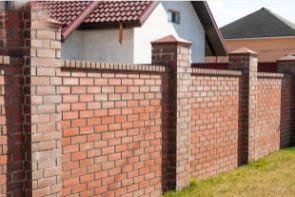
The use of brick columns instead of concrete columns enhances the architectural elegance. The cross-section of the built brick columns might be round, rectangle, square, or elliptical. These can be built to the required height. Corner pillars, porch columns, boundary gate pillars, and free-standing columns are all possible uses for these columns.

When compared to concrete column construction, brick column construction is quick and uncomplicated, requiring fewer tools and labor.

When compared to R.C.C. columns, the brick column is a more cost-effective option. The success of building a long-lasting brick column comes down to three things: proper planning, the right tools, and knowledge on how to build a brick column.


How Many Bricks are in A Column?

4 bricks per course are required for a 12′′ x 12′′ brick column, and 6 bricks are required for a 16′′ x 16′′ brick column. By merely veneering the bricks around a block column, you can save a lot of time and material when building a bigger column.

How to Build Your Own Brick Column

Set The Height And Width Of The Brick Column

The first step is to figure out how tall and wide you want your brick column to be. These measures aid in calculating the number of bricks and mortar required to construct the columns.

Layout Preparation on the Ground

Initially, a temporary rod marker must be used to pinpoint the location and center of the pillar or column on the ground. This marking will assist in supporting the vertical and horizontal alignment of the nearby pillars.

Foundation and Excavation

Excavation is carried out in order to construct the ground support. The depth of the excavation is determined by the foundation's thickness and the type of masonry used. If the masonry does not require reinforcement, a basic concrete bed of an appropriate mix is poured into the excavated area.

Masonry Column Brickwork

The brickwork is started when the foundation layer has been cured. The first-class bricks are utilized in conjunction with a 1:4 cement mortar. This is enough to securely transfer the loads to the foundation. The bricks must only be laid after they have been wetted by dipping them in water. For severe moisture conditions, certain brick column layers require a damp-proof coating. With the help of a plumb bob and compass, the brick is set vertically upwards while ensuring verticality and horizontal alignment.

Curing Procedures

Depending on the construction, the brickworks must be properly cured for 7 to 10 days.

Plastering, Finishing, and Painting are the Next Steps.

The majority of the brick column construction would look nice without plastering. It can, however, be plastered and completed if necessary. They can be painted if necessary.

Brick Columns with Reinforcement

By adding reinforcement into the brick masonry, the columns may be built. The method of inserting reinforcement into brick masonry will aid in the improvement of the column's load-bearing capability. In contrast to concrete design, this style of construction necessitates the use of reinforcement bars.

Special grooved bricks are used, which have a facility for the reinforcement to be placed. The reinforced brick column's construction specifications are shown in figure-4. Grout/mortar is used to fill the void space through which the reinforcement is passed, resulting in a monolithic unit.

Conclusion

You'll need to conduct some little touch-ups as you go along with the brick construction, such as filling in or tuck-pointing the joints with mortar (the same mortar you have used for laying the bricks, but perhaps in a thicker consistency). Make sure the mortar isn't too dry. After you've finished, try to do the tooling (every 4-5 courses).

Concave or raked-out (square recessed) joints are the most prevalent kind of joints. After you've finished tooling the brick joints, smooth off the surface of the mortar with a soft whisk brush.

Tuesday, 6 July 2021

Details Of Shear Reinforcement in R.C.C. Structures

Shear reinforcements are made to withstand shear or diagonal stress. Shear reinforcement is commonly provided in the form of stirrups to keep the longitudinal reinforcement in place while also taking the shear that the structure is subjected to.

The three forms of shear reinforcement employed are as follows: Stirrups that are vertical, bars that have been bent up with stirrups, stirrups that are inclined.

shear reinforcement in RCC structure


Stirrups that are vertical

These are the horizontal steel bars that are spaced evenly around the tensile reinforcement along the length of the beam. The diameter varies between 6 and 16 millimeters.

The stirrups' free ends are attached to the anchor bars, hanger bars, or compressive reinforcement at the compression area of the beam.

Because the sheer pressure at the supports is highest, the stirrup spacing at the supports is smaller than the spacing towards the midspan.

The stirrups' free ends are attached to the anchor bars (hanger bar) or the compressive reinforcement in the compression zone of the beam.

To get rid of diagonal cracks more effectively, narrowly spanning stirrups are recommended. Because the shear stress at the supports remains extreme, the distance of stirrups near to the supports is less related to the distance close to the mid-span.

Vertical stirrups come in a variety of styles

·         Single Legged Stirrup

·         Two-Legged Stirrup

·         Four-Legged Stirrup

·         Six-Legged Stirrup.

Bent Up Bars along with Stirrups

Many longitudinal bars in a beam may be bent near the supports where they are not required to withstand the bending moment. Bending Time differs significantly more from the supports. The diagonal stress can be tolerated by such bent-up bars. To maintain balance, the same number of bars will be twisted on all sides.

At more than one level, the bars can be bent equally across the length of the beam. The diagonal stress is not a problem with such bent bars. Typically, these bars are bent at a 45-degree angle. This gadget is used with higher shear forces. Applying bent-up bars and vertical stirrups to the input determines the beam's overall shear resistance. Bent up bars make for around half of the total shear reinforcement.

Stirrups that are inclined

Stirrups that are inclined at 45 degrees to prevent diagonal tension are also often available. These are available for the duration of the beam.

~~~~~~~~~~~~~~~~~~~~

To Get Regular Feeds On Recent Construction Industry News, visit our sites
sketchup3dconstruction.com
constructionnews.co.in


Sunday, 27 June 2021

Drywall vs. Plaster: What's the Difference?

Trades

Drywall is divided into two distinct trades: hangers and finishers (Finishers do the taping and finishing). Drywall hangers measure and trim drywall panels to fit the studs. Drywall finishers smooth out the seams and joints between panels, providing a smooth wall. Drywall Finishers, on the other hand, fill in the gaps left by the Hangers. Plastering, on the other hand, is a single trade rather than two. To make a smooth wall, plasterers normally place the lath, apply the base coat, and apply the final coat.


Tools

Plasterers apply the plaster with a hawk and trowel, whereas Drywall Finishers use a pan and knife. These tools are utilized in a variety of ways, each with its own set of procedures. Without substantial training and practice, a Drywall Finishers cannot simply move to use a hawk and trowel, and a pan and knife is a poor choice for spreading plaster. Similarly, a Plasterer cannot quickly move to drywall finishing using a pan and knife. The skillsets and tools are not transferable.

Cost

Drywall is less time-consuming and less difficult to install than plaster. Plaster artisans are becoming increasingly scarce, making it difficult to find someone with actual plaster experience. Some Drywall Finishers claim to have plaster experience, but unless they are journeyman Plasterers, they are unlikely to be able to accomplish anything more than minor plaster fixes. Drywall is less expensive than plaster because of these factors. You must consider the cost of the drywall panels themselves, not simply the labor when estimating the cost of drywall. Even with this factored in, drywall proves to be a less expensive choice to plaster.

Durability

Plaster is more durable than drywall in general. Its surface is tougher and more resistant to dents and scratches. There are several drywall varieties that promise to be particularly durable. Some abuse-resistant drywall is comparable to plaster in terms of hardness and durability. Plaster also has a higher resistance to water damage. It will break and disintegrate if soaked in a lot of water. When it comes to moisture from high humidity environments like locker rooms, bathrooms, external stairwells, and so on, plaster outperforms even moisture-resistant drywall.

Conclusion

Plaster and drywall have certain commonalities on a high level. Plaster and drywall, on the other hand, are radically different from a tradesman's perspective. A professional Plasterer will not be able to finish drywall with a pan and knife. In the same way, a skilled Drywall Finisher cannot execute plasterwork with a hawk and trowel. It is not possible to swap skillsets and toolsets.

~~~~~~~~~~~~~~~~~~

To Get Regular Feeds On Recent Construction Industry News, visit our sites
sketchup3dconstruction.com
constructionnews.co.in

Thursday, 15 March 2018

Arch and it's technical aspects

It is a structure, normally curved. While undergoing vertical loads, it motivates its two end supports to produce reactions with interiorly headed horizontal components.

        Application:

     Generally, the arches are utilized as a bridge, supporting a roadway, railroad track, or footpath, and as part of a building, where it arranges a large open space uninterrupted by columns. Arches are generally formed with steel, reinforced concrete, or timber.

Technical Aspects:
     The arch produces a structure that reduces tensile stresses by stretching an open space. All the forces are settled into compressive stresses.

     It is effective since some of the existing building materials like stone, cast iron and concrete can potently withstand compression but are very feeble when tension, shear or torsional stress is implemented to them. With the use of the arch configuration, substantial spans can be obtained.

       Hinge Introduction:

     Two unknowns. The reaction are two components of Force, or the magnitude and direction ะค of the consequential force .

     At the hinge joint moment is zero i.e. it can’t withstand the bending moment generated by external force.


Categorization

      Hinge less Arch:

     The hinge-less arch applies no hinges and authorizes no rotation at the foundations.

      Two Hinged Arch:

     The two hinged arch applied hinged bearings which permit rotation. The only forces produced at the bearings belong to horizontal and vertical forces.

Three Hinged Arch:

     The three-hinged arch includes a supplementary hinge at the top or crown of the arch. The three-hinged arch is affected marginally if there exist movement in either foundation (because earthquakes, sinking, etc.)

Tied Arch:

     The tied arch is a variation on the arch that facilitates construction although the ground is not solid enough to manage the horizontal forces.

Three hinged circular arch

  • A three hinged system may or may not have a vertical axis of symmetry. In the first case the central hinge c will lie on the axis of symmetry and the hinges at the support A and B are at same level.

A Comprehensive Overview of Window Types Based on Height Variations

Windows play a crucial role in the design and functionality of both residential and commercial buildings. When it comes to choosing the righ...